
Aesthetic books to read that are beautiful beyond the cover
Aesthetic is one of those words in our cultural lexicon that’s immediately understood, but harder to explain—especially when the word is applied to hobbies and objects. What, after all, is an aesthetic book? And how would we know what the best aesthetic books to read are?
Sometimes we just want to pick up the first alluring cover that we see. Other times, we want a world that feels immersive. Less “tell” and more “show.” Can we truly feel the emotional undercurrent of the main character’s place and time? What’s the underlying temperature of the story?
We can’t always put our finger on it, but when we’re looking for an aesthetic book to read, we’re looking for a particular atmosphere. A certain vibe, if you will. That’s why the perfect aesthetic book will depend entirely on the reading mood that you’re currently in.
In this post, we’ll go through what aesthetic books are, nine aesthetic reading moods, and the books that pair well with them.
Some links are affiliate links to Bookshop.org, and I may earn a small commission. A portion of every sale supports indie bookstores, too!
What makes aesthetic books so immersive?
While the choosing of an aesthetic book might start with an intriguing cover, this only scratches the surface of what an aesthetic book really is.
There are four components that are essential in an aesthetic book: setting, prose, emotional texture, and atmosphere. All together, they create a reading experience that is immersive and deeply satisfying.
Setting
The physical location of a story, as well as the time in which it takes place and the social/cultural environment, plays a role in aestheticism. A story set in the unforgiving Alaskan wilderness during the winter evokes a different mood than a story set in Anchorage during the summer.
The way a character dresses, their interests, even what’s strewn across their bedroom floor, is all a result of how they engage with their environment, and thus informs the overall aesthetic of a story.
Prose
We use language to communicate everyday. And yet, the way that we use language to speak and write is unique to us as individuals. That’s what makes prose so powerful.
The word choice, sentence structure, pacing, cadence, and overall writing style of an author—and whether we like it or not—is what makes the reading of a story aesthetically pleasing.

Emotional texture
The emotional layers of a character’s inner world correlates strongly to what we look for in an aesthetic book. Imagine what it would be like to read a book where an author just said, “He was angry,” or “she was disappointed.” Boring!
Instead, an author’s ability to make emotions sensory—a lip quiver or a tightening of the chest—and using subtext to give us clues as to how a character truly feels—awkwardly laughing after hearing bad news—lets us fill in the gap of what’s left unsaid.
Think about it: there’s a reason why so many aesthetic books have complex characters, too.
Atmosphere
If the setting tells us where we are, prose shapes how we experience it, and emotional texture reveals what it means to the people inside it, then the atmosphere tells us what it feels like to be there.
It’s what helps us paint a picture of the story in our minds’ eye. Atmosphere is why some books stay with us long after we’ve forgotten the plot or the names of the characters: we remember how they made us feel.
9 aesthetic books to read next
The truth is, choosing an aesthetic book often has less to do with genre and more to do with mood reading.
The list below is divided up by specific reading moods. All nine book recommendations have distinct prose, but the setting, atmosphere, and emotional texture are different, making the choosing of an aesthetic book all the more fun.
1. For the beautiful devastation aesthetic
Sometimes, we don’t want a book that’s simply sad. We want a story that reminds us how fragile beauty can be. Even the smallest moments of tenderness become more precious, precisely because they don’t last forever.
There are forces larger than us at play—war, history, chance—but the care we show one another remains one of the few things that gives life meaning.
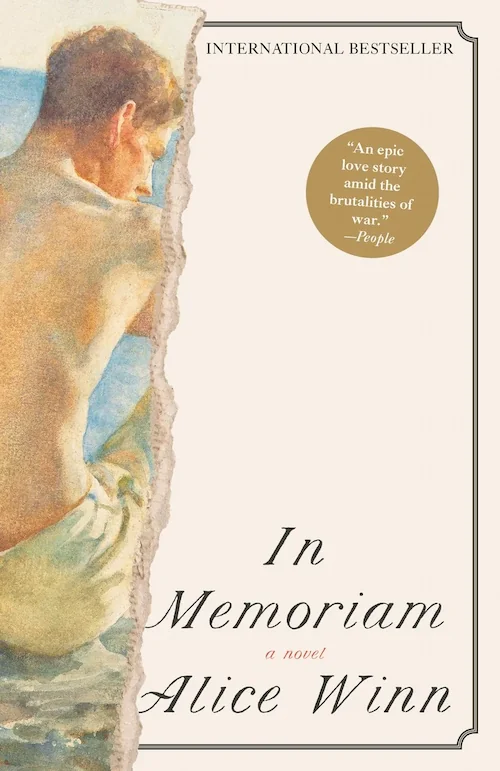
In Memoriam by Alice Winn
Genre: Historical fiction, LGBTQ literature
Schoolmates and best friends Gaunt and Ellewood think their love for each other is unrequited right up to when they both enlist in the British army during World War I. Told from alternating perspectives, their yearning makes everything that follows even more precarious. If you’re looking for aesthetic books to read that balance tenderness with tragedy, In Memoriam is one of the most unforgettable novels I’ve read.
“Daffodils sunned out among the headstones. How alive it all seemed, and how gracious—to die in an era when your death bought you a brief moment at the centre of something. To be important, rather than one of millions.”
— Alice Winn, In Memoriam
2. For the yearning aesthetic
Longing. Emotional ache. The torture of all that’s unspoken. This book aesthetic isn’t interested in neat resolutions. A slow burn and a happy ending aren’t always enough.
True yearning is about the feelings that aren’t immediately resolved, and how sometimes, they never will be. Unfortunately, some yearning is forever.
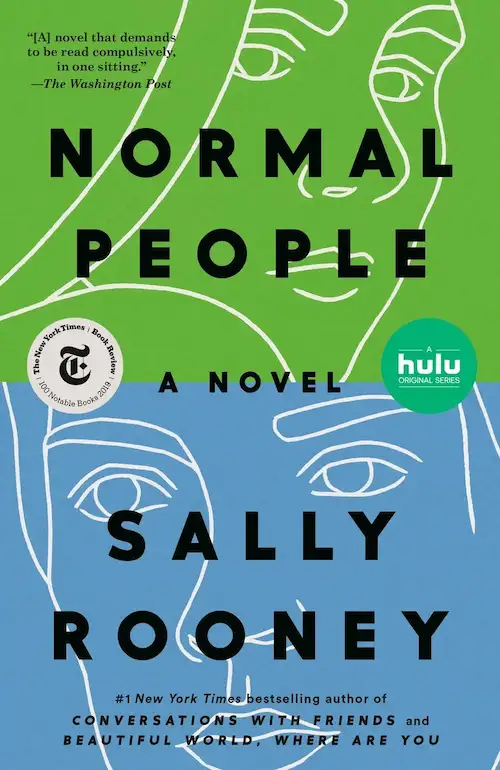
Normal People by Sally Rooney
Genre: Literary fiction
We follow Connell and Marianne as they navigate friendship—and often more—through early adulthood. The atmosphere here is relational rather than physical, built from the quiet distance between two people who repeatedly find themselves unable to reach one another. Rooney is masterful in her prose, which is spare in a way that makes everything unsaid seem even more exposed. If you’re looking for an aesthetic book to read that captures longing in all its complexity, few novels do it better than Normal People.
“If he silently decides not to say something when they’re talking, Marianne will ask “what?” within one or two seconds. This “what?” question seems to him to contain so much: not just the forensic attentiveness to his silences that allows her to ask in the first place, but a desire for total communication, a sense that anything unsaid is an unwelcome interruption between them.”
— Sally Rooney, Normal People
3. For the wild, gothic aesthetic
This one’s for when you’re in the mood to read a story where the landscape shapes every emotion and decision. Here, the wind feels sentient, the moors refuse to be tamed, and even the weather seems to have a temperament of its own. The gothic book aesthetic is, at its core, arresting, obsessive, and just a little dangerous.
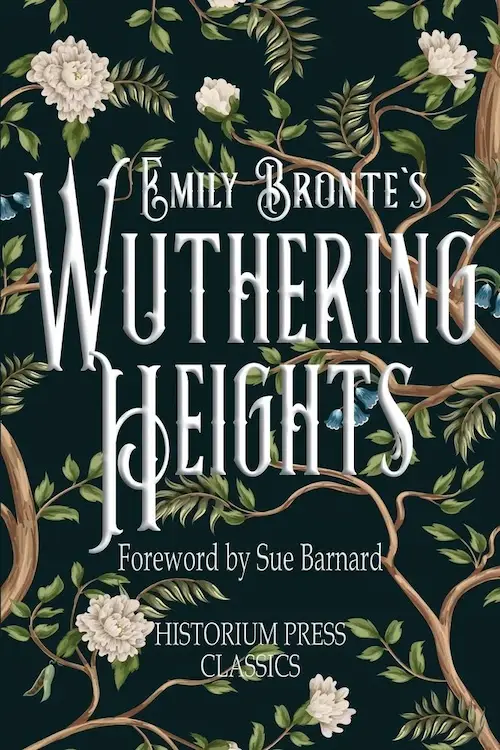
Wuthering Heights by Emily Brontë
Genre: Gothic fiction, classic
What happens when two fiercely devoted and deeply destructive people can’t be together? Few novels make setting feel so inseparable from character. If you’re searching for an aesthetic book to read that is wild, atmospheric, and emotionally untamed, Wuthering Heights remains unmatched.
“Heaven did not seem to be my home; and I broke my heart with weeping to come back to earth; and the angels were so angry that they flung me out into the middle of the heath on the top of Wuthering Heights; where I woke sobbing for joy.”
— Emily Brontë, Wuthering Heights
4. For the hidden worlds aesthetic
Have you ever been in the mood to read a book that reminds you that something much greater than us exists? That there’s a layered, intricate world waiting just beyond reach, if only you knew where to look?
This kind of book aesthetic blurs the boundary between reality and story until the two become impossible to separate.
The Starless Sea by Erin Morgenstern
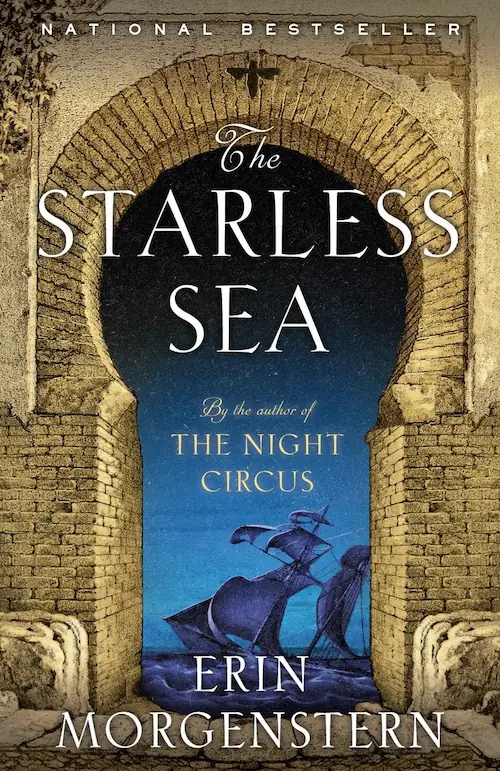
Genre: Fantasy
When Zachary Ezra Rawlins discovers a mysterious book at his university—one that contains a story from his own childhood—he embarks on a quest across time and space that leads him to an underground world of libraries. Told in a multi-narrative structure, this is for readers who love books about books, believe stories can become physical places, and know the grief of loving something they may never see again.
“Strange, isn’t it? To love a book. When the words on the pages become so precious that they feel like part of your own history because they are. It’s nice to finally have someone read stories I know so intimately.”
— Erin Morgenstern, The Starless Sea
5. For the stifling summer aesthetic
Desire feels inseparable from the weather itself. Heat stretches time and intensifies our emotions. An atmosphere of anticipation so thick, it becomes almost physical. Intensity builds, and so does our need to act on it.
This book aesthetic captures those long summers of adolescence and early adulthood, when everything feels slowed down by warmth. The kind of summer that accumulates feelings—where nothing happens, and everything does.
(For more perfect summer reads, head over to my blog post on seasonal living and reading!)
Mrs. S by K. Patrick

Genre: Queer fiction
Set in a boarding school for girls in rural England, the desire between a nameless matron and the headmaster’s wife stretches across an entire summer. Humid with anticipation, this atmospheric slow burn unfolds in poetic prose that captures the intensity of infatuation with remarkable accuracy. This is the perfect aesthetic book to read for when desire feels inseparable from place and season.
“She whispers something I can’t catch. I should whisper too, ask her to repeat what she said. I can’t. I will spend a lifetime wondering.”
— K. Patrick, Mrs. S
6. For the creative crossroads aesthetic
As a writer, I sometimes gravitate toward stories that ask a difficult question: how much sacrifice am I willing to make to live a creative life? These stories unfold in the uncertain space between who we are and who we’re hoping to be.
This book aesthetic is full of unfinished manuscripts, small apartments, side jobs, and impossible choices. It’s about creative and emotional restlessness—and the quiet courage of continuing anyway.
Writers & Lovers by Lily King
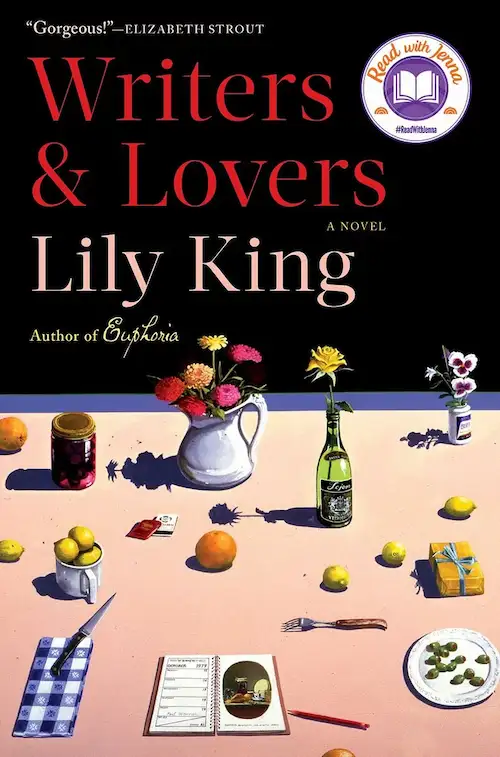
Genre: Literary fiction
Casey Peabody is a 31-year-old writer who’s juggling her mother’s recent death, financial struggles, two romantic interests, and finishing the novel she’s been writing for years. Set in late-1990s Massachusetts, King’s humorous prose captures the strange limbo of early adulthood in a way that’s still relatable today. If you’re searching for an aesthetic book to read about art and grief, this one’s for you.
“I look into my eyes, but they aren’t really mine, not the eyes I used to have. They’re the eyes of someone very tired and very sad, and once I see them I feel even sadder and then I see that sadness, that compassion, for the sadness in my eyes, and I see the water rising in them. I’m both the sad person and the person wanting to comfort the sad person.”
— Lily King, Writers & Lovers
7. For the intimate grief aesthetic
Grief resists language, which may be why books about loss are so necessary. They give shape to experiences that are difficult to explain and remind us that love doesn’t disappear simply because someone is gone.
This book aesthetic is about the things people leave behind, and how they’re made sacred by memory. Whether it’s specific objects, meals, or just the way that grief lives in ordinary things, we can learn so much from authors who dare to put this experience in writing.
Crying in H Mart by Michelle Zauner

Genre: Memoir
Through food, Michelle Zauner explores the loss of her mother alongside questions of identity, family, and what it means to inherit Korean culture. This memoir earns its place among the aesthetic books to read not just for its emotional depth, but for Zauner’s sensory precision. Grief isn’t abstract. Food becomes memory, love, and mourning all in one with specific and irreplaceable prose.
“Sobbing near the dry goods, asking myself, Am I even Korean anymore if there’s no one left to call and ask which brand of seaweed we used to buy?”
— Michelle Zauner, Crying in H Mart
8. For the dark and dangerous aesthetic
This prose quietly draws you in while keeping you off balance. The danger is rarely obvious, but it’s there from the very first page. This aesthetic is for readers who like beauty threaded with a little bit of menace.
Think sealed worlds: campuses, moors, old houses, and isolated communities where fascination gradually gives way to unease.
The Secret History by Donna Tartt

Genre: Literary fiction
Five intelligent students at a Vermont liberal arts college are studying Ancient Greek taught by a larger-than-life professor. Their intellectual ambition is admirable at first, but when one of their own ends up dead, the obsession and moral decay beneath the surface become impossible to ignore. Among aesthetic books to read for lovers of dark academia, few have been as enduring as The Secret History.
“I wanted to maintain the illusion that their dealings with me were completely straightforward; that we were all friends, and no secrets, though the plain fact of it was that there were plenty of things they didn’t let me in on and would not for some time. And though I tried to ignore this I was aware of it all the same.”
— Donna Tartt, The Secret History
9. For secrets in the wilderness aesthetic
There are books where nature is as watchful as the people inside it. Pine trees, lake water, empty trails, and sprawling estates become part of the mystery.
This book aesthetic features landscapes that are lush, expansive, and unsettling, carrying the sense that something sinister happened here—or is about to. In these stories, the landscape doesn’t forget, and neither does the community around it.
The God of the Woods by Liz Moore
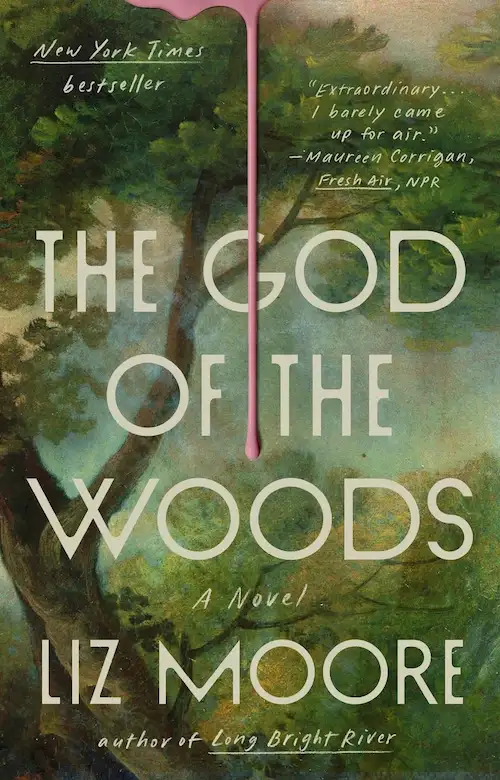
Genre: Literary fiction
Set at an Adirondack summer camp where two disappearances occur decades apart, Moore layers family secrets, class tensions, and the weight of history into a mystery that unfolds slowly and from multiple perspectives. The result is atmospheric in the truest sense, where the Adirondack wilderness plays a role in both threat and refuge. If you’re looking for an aesthetic book that delivers both ambiance and suspense, The God of the Woods is for you.
“A certain energy was appreciable in the air: it was the energy of teenage hormones, of sidelong glances, a taking note of who had changed over the past year, and in what ways. It wasn’t just the campers, but the counselors, too.”
— Liz Moore, The God of the Woods
Looking for aesthetic books to read? Start here.
We often use the word “aesthetic” as shorthand for “beautiful,” but books don’t have to be beautiful to be aesthetic. Some of the most memorable reading experiences are unsettling, melancholy, and yes, even devastating. What they share is atmosphere: the feeling of stepping so completely into a world that it stays with you after you’ve closed the book.
Sometimes what looks like a reading slump is actually a sign that you’re craving a different atmosphere altogether. That’s why the books that we consider aesthetic are so personal. We don’t just choose aesthetic books based on genre or popularity—we choose them based on mood, memory, season, and whatever unnamed feeling we’re trying to find more of.
The goal isn’t to read the most beautiful books. It’s to find the books that make us feel more present in our own lives.


